



Sales teams are often drowning in data, chasing leads that go nowhere, and losing hours to repetitive tasks that don't move the needle. While companies invest heavily in CRM systems and sales enablement tools, teams still spend less than 30% of their time actually selling. The rest gets eaten up by admin work, manual data entry, and follow-ups that could be automated.
This is where AI enters the picture as a practical solution to a very tangible problem. And the shift is already happening. Companies that want to stay competitive are adopting AI in sales, turning what used to be just a trend into a present-day reality. The goal here is straightforward: give sales professionals their time back so they can focus on building relationships and closing deals. Incorporating AI in sales means letting technology handle the repetitive heavy lifting – qualifying leads, personalizing outreach at scale, and keeping the pipeline moving without constant manual intervention – while humans focus on interactions where empathy, negotiation, and relationship-building actually matter.
At Rebbix, we've seen firsthand how strategic AI implementation transforms sales processes from chaotic and reactive to systematic and proactive. In this article, we'll explore the current state of AI in sales automation, backed by real data, and then give examples of specific use cases from our own experience to show exactly how AI moves from hype to measurable results.
Why AI in sales automation is no longer optional: in numbers
According to the latest reports on the current state of AI adoption in sales processes, AI is making the biggest impact on teams in six key areas:
- lead qualification and scoring
- personalized outreach at scale
- sales forecasting and pipeline analysis
- automated follow-ups and lead nurturing
- data analysis and insights generation
- administrative task automation
Now, let’s discuss some numbers that reveal why this is a fundamental shift in how sales teams operate.
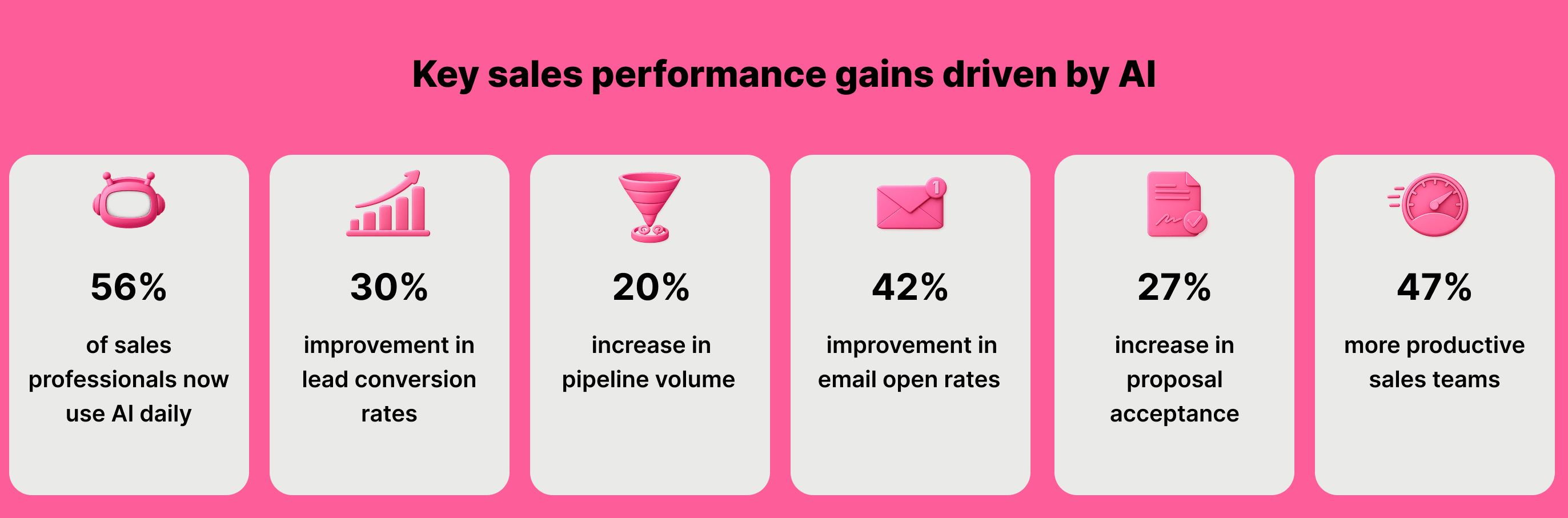
The transformation is happening faster than most people realize. 56% of sales professionals now use AI daily, and those users are twice as likely to exceed their sales targets compared to non-users. This shows that we've moved well past the early-adopter phase into mainstream business practice.
The efficiency gains alone tell a compelling story. Sales teams using AI report being 47% more productive and saving an average of 12 hours per week by automating repetitive tasks. That time doesn't disappear. It gets redirected to prospect outreach and client relationship building. The math is straightforward: sellers typically spend only about 25% of their time actually selling. AI can potentially double that by handling the work that surrounds the sales process, but doesn't add much value.
However, time savings are just part of the equation. Far more impact shows up in conversion metrics. Organizations using AI in their sales pipelines see a 20% increase in pipeline volume and a 30% improvement in lead conversion rates. For sellers who frequently use AI, the improvements span all major performance metrics:
- 81% report shorter deal cycles
- 73% see increased deal sizes
- 80% witness higher win rates
The precision of AI-driven personalization is pushing these numbers even higher. Companies deploying AI-driven personalization see email open rates increase by 42%, meeting booking rates rise by 31%, and proposal acceptance improve by 27%. When you combine that level of engagement with AI's ability to work around the clock without breaks or vacation days, the impact compounds rapidly.
Perhaps the most striking indicator of AI's shift from nice-to-have to necessity: 78% of sales leaders worry their organizations are falling behind competitors in AI adoption. That anxiety isn't unfounded. The gap between new AI users and late adopters is widening every quarter, and companies that deployed AI early are now building on that foundation while others are still figuring out where to start.
Analyzing all this data proves the point: AI in sales automation has crossed the threshold from emerging technology to competitive necessity, fundamentally changing not just how sales teams work, but what's possible in terms of efficiency, conversion rates, and revenue growth.
AI sales automation in practice
We've explored how companies are leveraging AI in sales automation, backed by compelling statistics that show measurable impact. Now it's time to move from industry-wide trends to specific examples. At Rebbix, we've implemented AI-driven solutions across our own sales processes, and we're already seeing tangible benefits alongside valuable lessons about what works in practice. Here are three use cases that showcase how AI moves from concept to a working system.
Case 1: AI-powered lead data enrichment
One of the most time-consuming aspects of sales outreach is gathering accurate, up-to-date information about potential leads. Before reaching out to a prospect, sales teams need to verify contact details, understand the company's profile, validate email addresses, and personalize their approach based on relevant business context. When done manually, this research can eat up hours of productive selling time.
Therefore, we built an automated lead enrichment workflow using n8n. The system takes a lead's basic information as input and automatically enriches it with data about both the individual and their company. The workflow validates email addresses to ensure deliverability, pulls relevant company information, and structures all this data in a format that's immediately actionable for outreach.
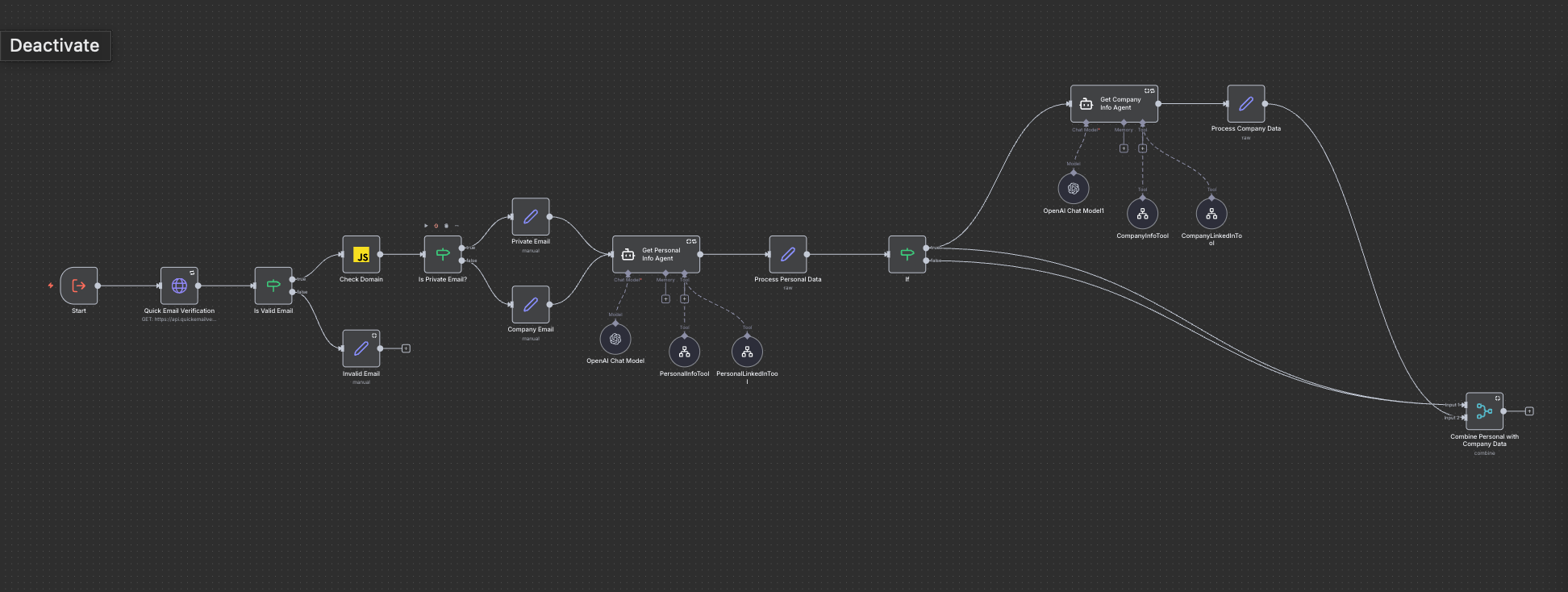
Looking at the workflow architecture, you can see how the automation handles multiple data points. The process starts with email verification to confirm validity, then branches into consecutive data collection streams – one focusing on personal information about the lead, another gathering company-level details. The system uses OpenAI's models to search for particular contact information, process it, and automatically populate our CRM with structured, actionable data that sales teams can use for outreach.
What used to require 15-20 minutes of manual research per lead now happens automatically in the background.
In addition to this, we also have automated AI-powered workflows for:
- identifying a prospect’s industry and market segment
- pinpointing their location
- determining their company’s size
- discovering if a company’s website is active
The result: our sales team spends less time searching for prospects and more time crafting personalized messages that are informed by accurate data.
Case 2: Automated network updates
Staying on top of what's happening in your professional network is crucial for identifying business opportunities, but it's also incredibly time-consuming. Our business development manager used to spend an entire workday each week manually compiling a report on network updates – scrolling through social media, checking dozens of profiles for job changes and company moves, reading articles, listening to podcasts, and searching for other relevant developments that could signal opportunities for outreach.
We automated this entire process with an n8n workflow that does everything in minutes instead of hours. The system runs on a schedule, automatically searching through our contact database and pulling the latest updates from social media profiles and posts. It captures both profile changes (new positions, company transitions) and recent activity, then uses AI to summarize what matters.
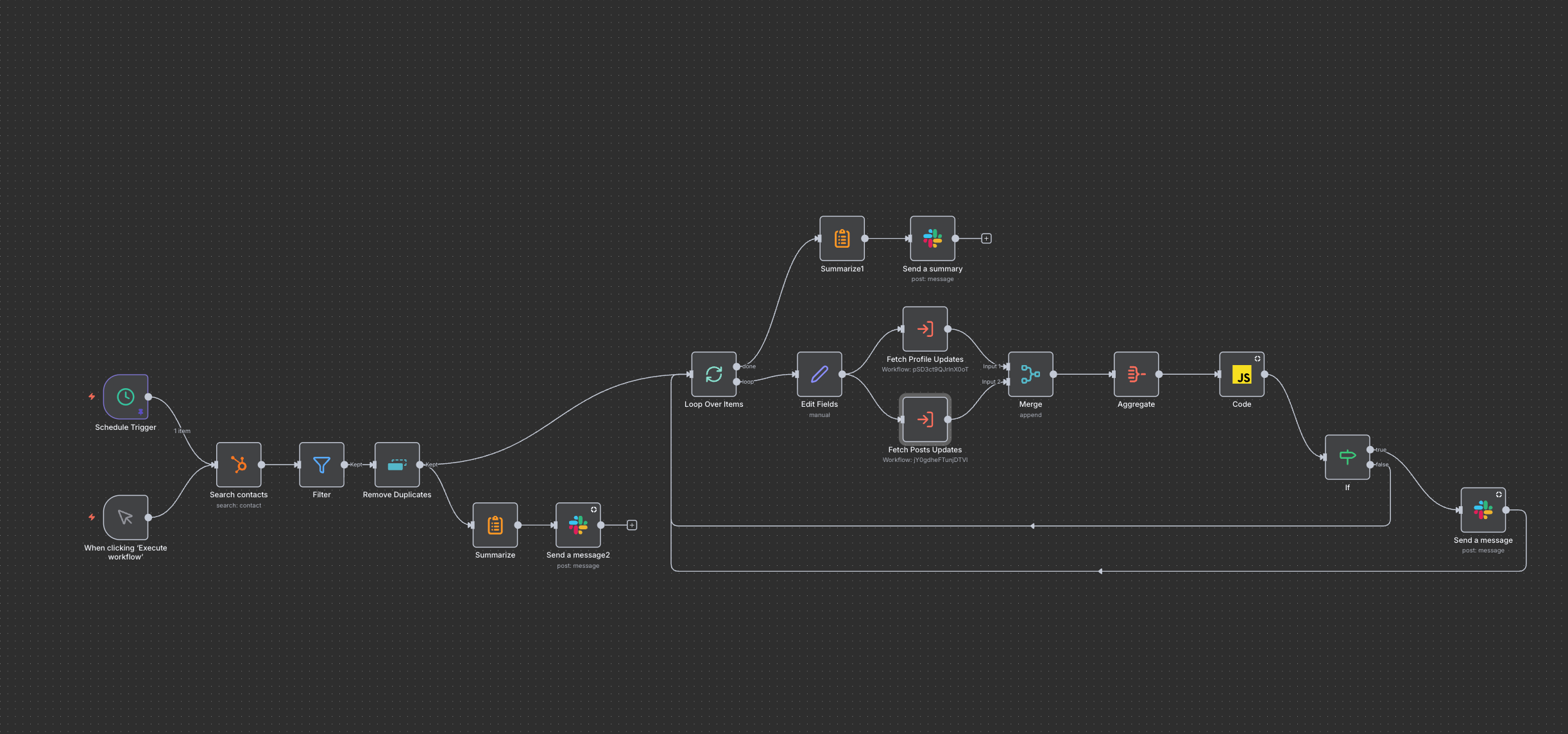
The workflow handles the data collection systematically: it loops through contacts, fetches updates, merges the information, and aggregates it into a structured format. The AI component synthesizes updates into digestible summaries. The final output gets delivered directly to Slack, where the team can review it without switching between multiple tools.
The result: instead of spending hours gathering information, our sales team now focuses on interpreting the updates, identifying patterns, and determining which developments require follow-up action.
Case 3: AI-based project estimation calculator
Getting an accurate project estimate has always been one of the most time-consuming challenges in the sales process. Non-technical founders with a new idea face a difficult choice: schedule lengthy discovery calls with multiple teams, each trying to upsell their services, or invest their existing team's time in exploratory work. Either way, it's days of back-and-forth before they can even understand the scope and budget of their project.
This is why we built an AI-powered estimation calculator that delivers comprehensive project estimates after a person spends just 90 seconds answering 5-7 simple questions. The system generates a detailed breakdown, including project description, price estimate, technical architecture, team composition, and milestone timelines.
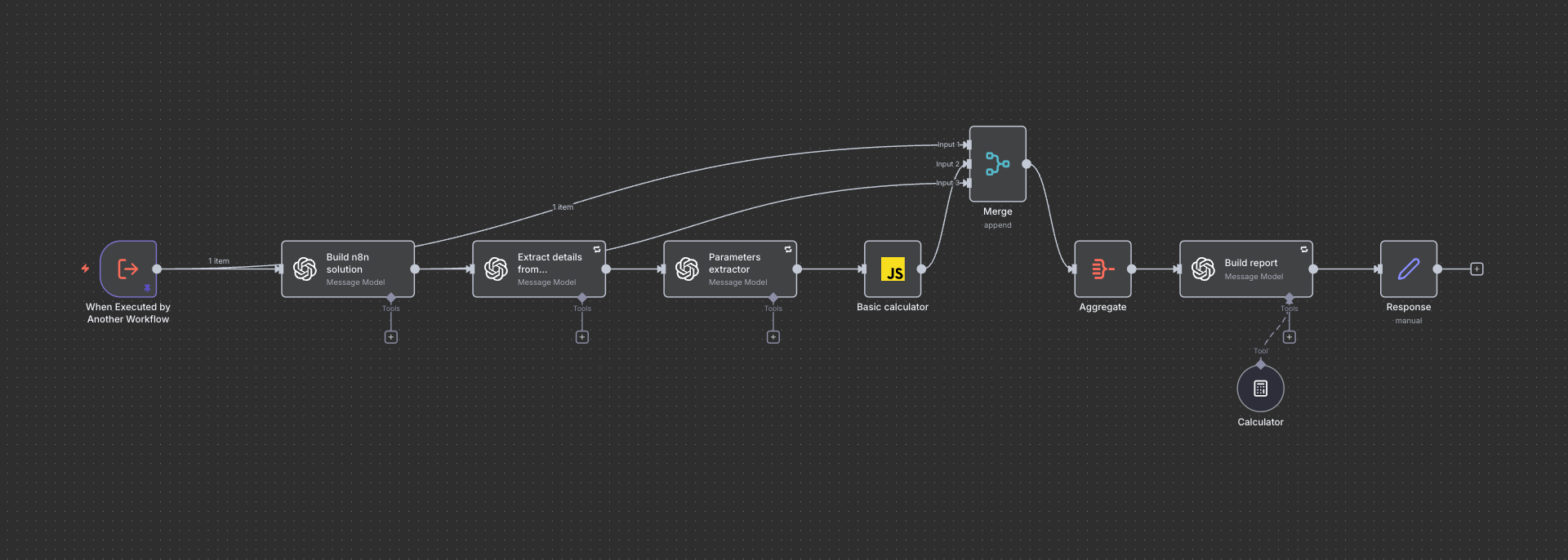
The workflow shown here illustrates how the system processes input: it identifies the right parameters, runs calculations, and merges everything into a comprehensive report.
What makes this system reliable is the validation layer. We incorporated data from our real project portfolio to ground the estimates in actual development timelines rather than AI's best guesses. The workflow can even visit and analyze a client's existing platform to understand their business model and technical requirements, feeding that context into the estimation process.
The result: our leads can now receive accurate preliminary project estimates in minutes instead of the two days it used to take. More importantly, highly-skilled developers who were spending time on this process can now focus on other priorities.

Final thoughts
AI in sales automation has moved from experimental technology to essential infrastructure. The statistics show consistent double-digit improvements across every metric that matters – productivity, conversion rates, deal velocity, and revenue growth. But numbers alone don't capture the full picture.
What we've learned from implementing AI in our own sales processes is that the real value is about fundamentally reshaping how teams allocate their expertise. When automation handles data collection, lead enrichment, and routine tasks in general, sales professionals can finally focus on what actually requires human judgment: understanding nuanced client needs, navigating complex negotiations, and building relationships that drive long-term partnerships.
If you're ready to explore how AI can transform your sales operations, we're here to help. Contact us to discuss how we can help you turn sales automation from concept into a measurable competitive advantage.


.png)
.png)
.png)